
Women's Abayas
Coverage, cut and personal preference.
An abaya is bought twice: once for how it covers, and once for how it moves. The first is a matter of personal choice and varies widely between wearers; the second is a matter of cut, cloth and finishing. We try to be honest about both.
Our three concept pieces range from an everyday layer to a long, unbroken occasion line. None of them is presented as the correct way to dress — they are three answers to the same question, and you decide which one suits you.
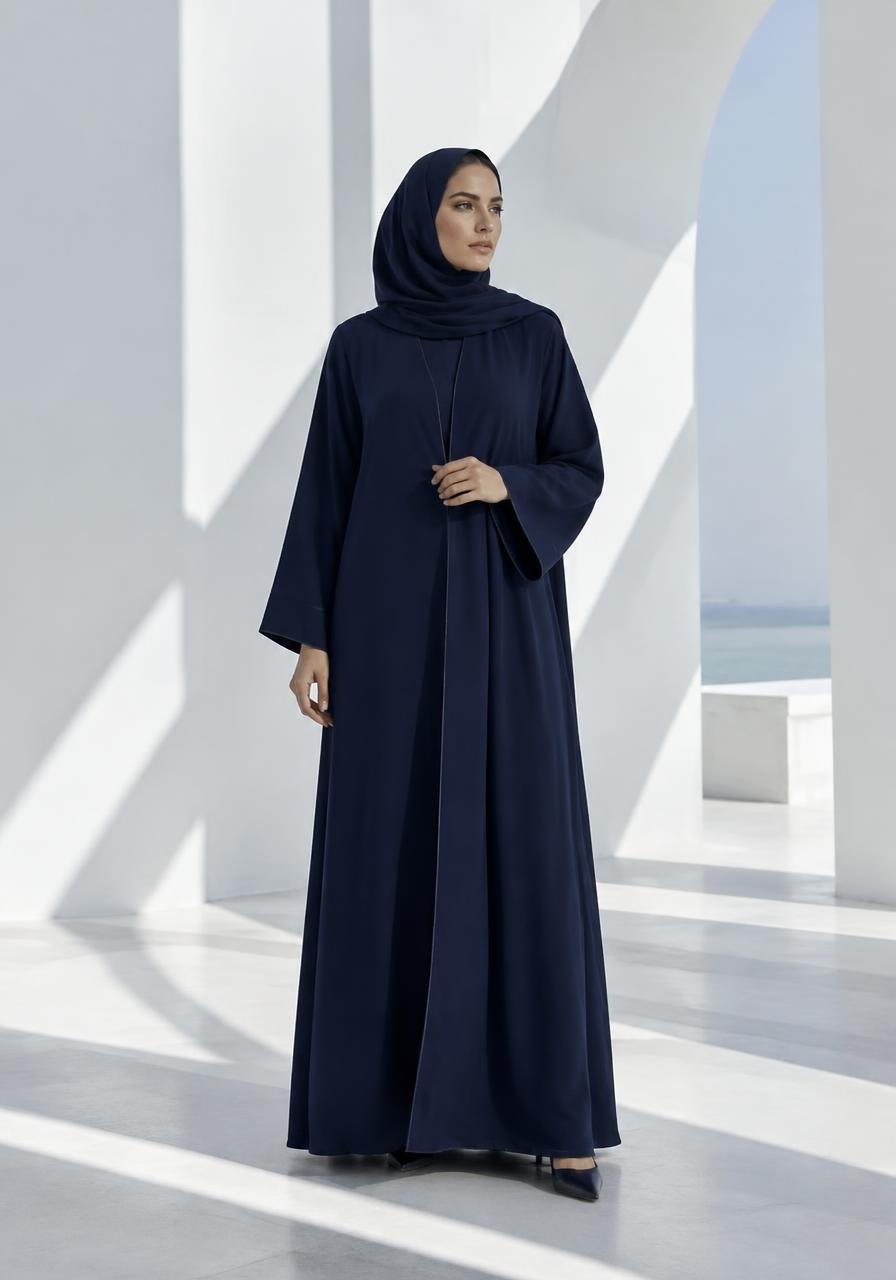
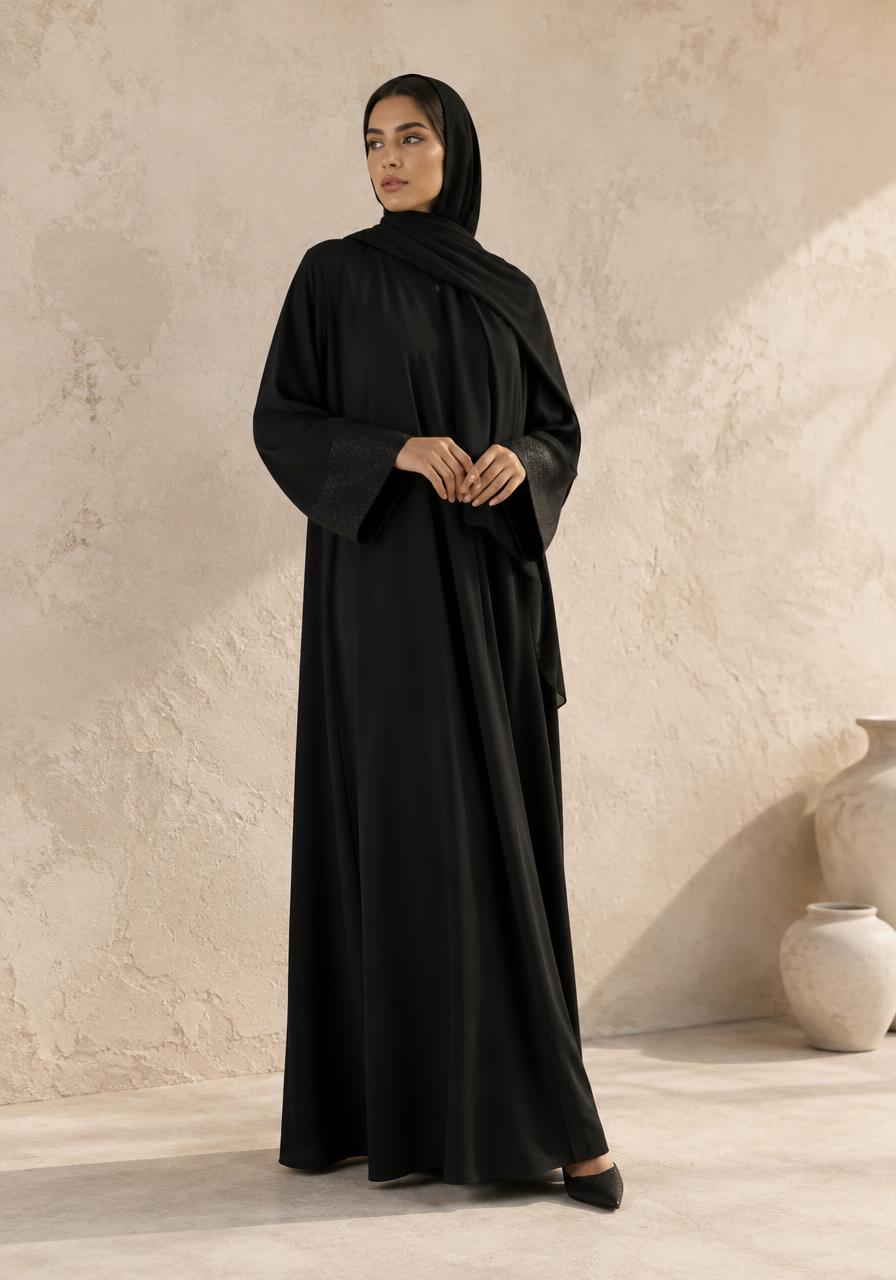
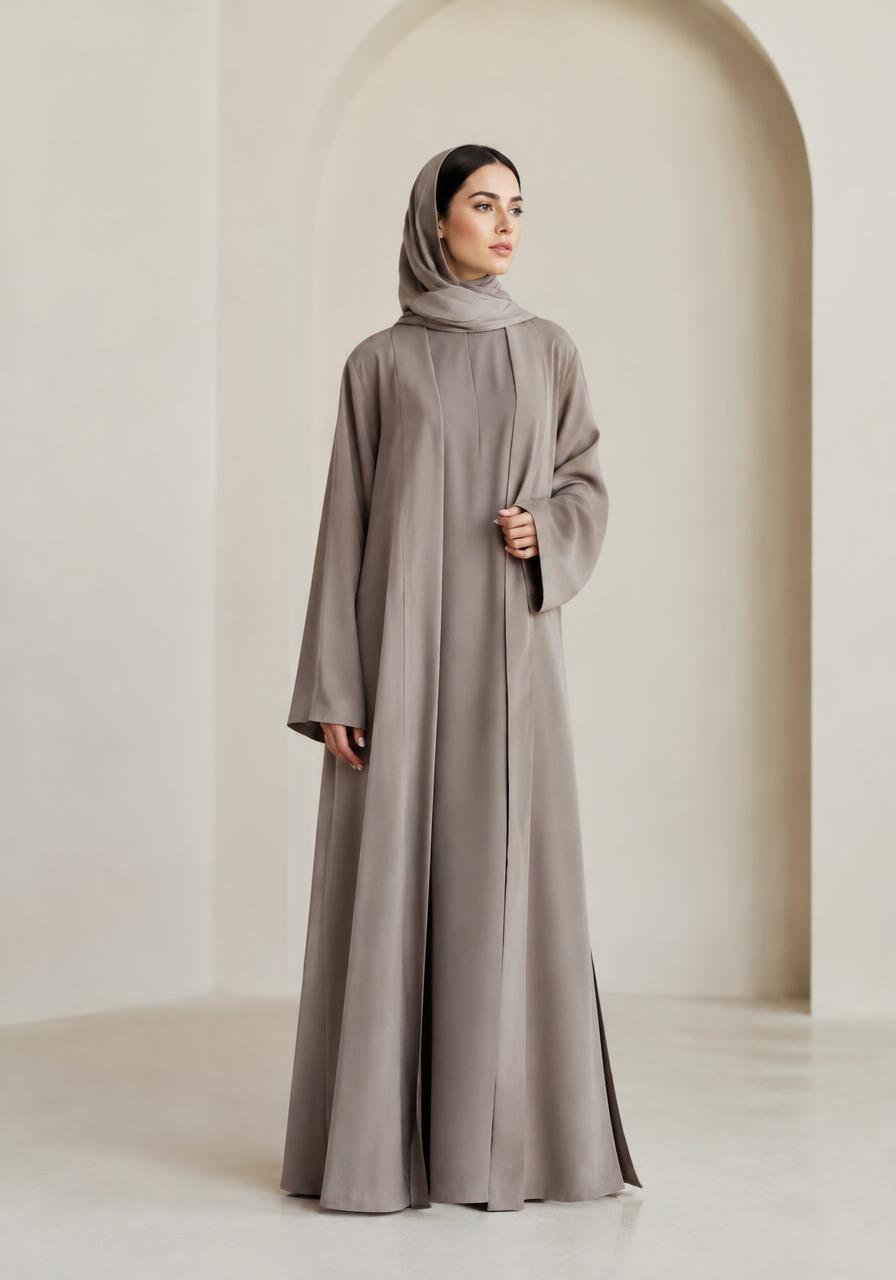
Women's Abayas
Women's Abayas
Flowing, modest silhouettes for everyday wear and occasions.
2 sample products
Everyday and occasion
Everyday and occasion
Where the collection supports it, you can browse by the day you are dressing for rather than by garment name.
Diagrams are generic illustrations of where a measurement is taken, not a size chart for any specific garment.
Size guide
Length, sleeves and layering
Abayas are judged against the body they cover, so the useful questions are a little different from a thobe's.
Decide your length first — at the ankle, or longer with a train — because it changes how the garment moves and how much inner layer you need beneath it.
Sleeve width and sleeve length are separate decisions: a wide sleeve can still be short at the wrist, and a close sleeve can be long. Check both against your own preference for coverage.
Layering is where abayas earn their keep. An open-front piece over a matching inner dress gives you one outer garment and several combinations; a closed-front garment is quicker on and off but offers fewer pairings.
Why drape, lining and opacity matter
Why drape, lining and opacity matter
These three words decide whether an abaya behaves the way you want it to, and they must be answered by the specific garment — never by a general claim across a collection. We do not state opacity, lining or included accessories for a piece until its details are confirmed; the product page then carries the garment's own answer, or a clear 'to be confirmed' state.
- Drape describes how the cloth falls from the shoulder — stiff cloth holds a shape, soft cloth follows the body.
- Lining changes opacity and comfort, and whether an inner layer is needed; it is a per-garment detail.
- Opacity is best judged in daylight and against the inner layer you intend to wear, so ask rather than assume.
- Any accessory in a photograph — a scarf, a belt, an inner dress — is a styling prop unless the product page lists it as included.
Guidance, without assumptions
Coverage preferences vary enormously, and the right answer is yours. If you would like help choosing between an open or closed front, or between two lengths, send us the measurements you are comfortable sharing and the look you are aiming for.
Abayas: common questions
Open front or closed front?
Open-front abayas layer over an inner dress and multiply your outfits; closed-front garments are faster to wear and give a single continuous line. If you travel or dress quickly, closed front is usually easier; if you like variety from one outer piece, open front wins.
How do I choose a size?
Start with your usual size in the lettered range, then check the garment's sleeve length and total length where they are published. Fit preference — closer to the body or fuller — decides the rest.
Is this abaya opaque?
We do not answer that for a garment whose fabric is not confirmed. Ask us and we will tell you what is known about that specific piece, including whether a lining is part of it.
Does the price include the inner dress or scarf?
No, unless the product page lists them. Items styled in photographs are props, and each price covers the garment in the colour and size you selected.
Which abaya suits a hot climate?
Weight and weave matter more than the word 'abaya'. A lighter, more open weave breathes better; a heavier cloth drapes further and holds its line. Where a garment's fabric is confirmed, the product page describes it.
Can an abaya be tailored?
Two of our three concept pieces can be requested through personal tailoring; the product page says which. Length, sleeve and fit preference are the usual adjustments.
Are these real products?
They are concept samples in a prototype store, with sample prices and concept photography. Fabric, stock and delivery details are confirmed before launch.
Journal & buying guides